

What Is the Section 232 Anti-Stockpiling Rule?
The August 6 Section 232 proclamation included a provision for the Secretary of Commerce to restrict a company’s imports if it was determined they were stockpiling polysilicon or polysilicon derivatives prior to the December 4 effective date.
The TFR provides specifics about what qualifies as stockpiling under Section 232:
- For existing Importers of Record (IORs), importing “substantially above” their historical records is considered stockpiling.
- For new Importers of Record (registered after August 6, 2026), importing above weekly thresholds without Commerce approval is considered stockpiling.
Section 232 Import Limits for Existing Importers Of Record
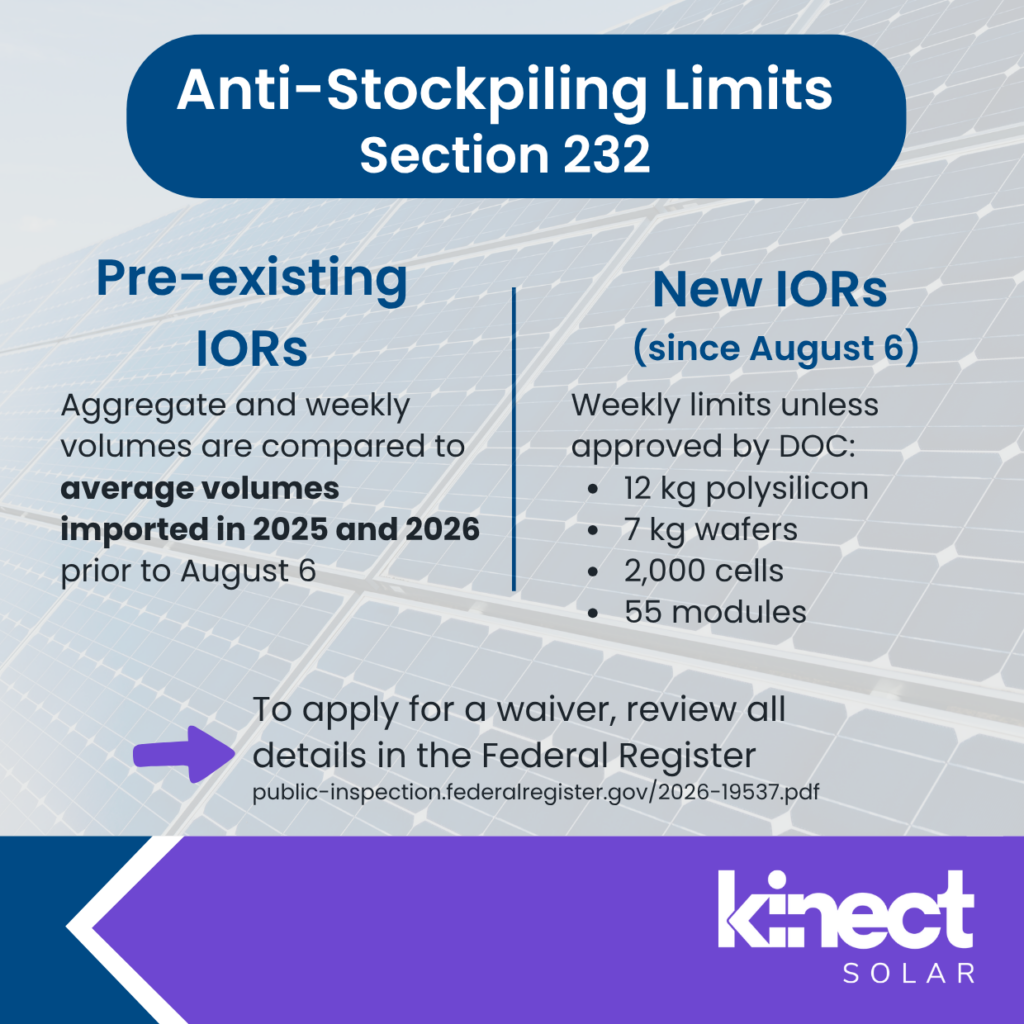
For an IOR registered prior to the August 6 declaration, “volumes substantially greater than its historic averages” are prohibited. Commerce will determine whether an IOR meets this standard based on, but not limited to, the following:
- Aggregate volume of Polysilicon Products imported since August 6, 2026
- Weekly average volume of Polysilicon Products since August 6, 2026
- Weekly average volume of Polysilicon Products imported between January 1, 2026 and August 6, 2026
- Weekly average volume of Polysilicon Products imported in 2025
- Use of affiliates that do not customarily import Polysilicon Products
- Use of new IORs to import Polysilicon Products
Weekly Import Limits for New Importers Of Record
IORs registered after the August 6 declaration are subject to weekly threshold limits, unless approved by Commerce:
- Polysilicon: 12 kg
- Wafers: 7 kg
- Cells: 2,000 units
- Modules: 55 units
Section 232 Penalties for Solar Importers and Customs Brokers
Brokers found to be evading Section 232 anti-stockpiling rules may have their broker’s license suspended or revoked, and may face other penalties. New IORs that violate weekly thresholds will be prohibited from importing additional polysilicon products until December 4, 2026.
When Did Section 232 Anti-Stockpiling Enforcement Take Effect?
We’re hearing that multiple importers have already been blocked from importing cells and modules. We expect aggressive enforcement to continue through December 4.
How to Apply for a Section 232 Import Waiver
New IORs and companies that are prohibited from importing polysilicon products may apply to the Department of Commerce for a waiver. When applying for a waiver, the company must include an explanation of how the imported products will be used, including whether imports support the company’s own manufacturing or whether the imports will be transferred to third parties. The application must also explain a legitimate business purpose.
Any company that plans to submit a waiver application should review the full application requirements in the TFR: https://public-inspection.federalregister.gov/2026-19537.pdf
How Section 232 Import Restrictions Could Affect Solar Module Supply and Pricing
We expect aggressive Section 232 enforcement to restrict market supply and push module prices up.
How Solar Developers Can Reduce Section 232 Procurement Risk
Developers can likely continue to import polysilicon products at similar volumes to 2025 without running afoul of new regulations. To take advantage of current market pricing, developers may also wish to source equipment that is already in the United States.
Project specifics differ, but all buyers should be aware of the financial risks and benefits of imported solar equipment as well as the benefits of domestically-made equipment.
Kinect Solar has a large inventory of modules available and ready to ship, including FEOC-compliant imports, lower-priced imported modules without FEOC certification, and domestic content. Call us to request a quote or to discuss inventory options with a solar expert.
Section 232 Warehousing and Logistics Considerations
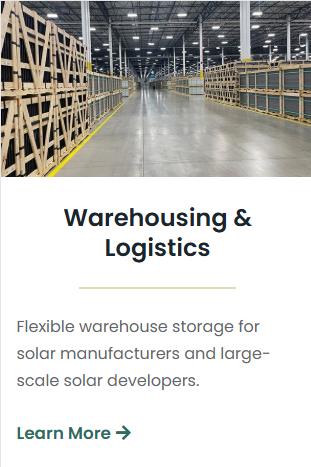
Warehousing bids have increased significantly since the new Section 232 declaration in August. Kinect Solar offers on-demand warehousing and custom logistics nationwide to support developers looking to expand their product warehousing in the coming months.
- Posted in Featured, Regulation, Solar Industry, Solar Panels
- Tagged in Solar developers, solar imports, Solar Policy, solar tariffs