


Solar developers who can strategically leverage warehouse solutions have an outsized advantage in today’s market. Tax incentives are expiring, new tariffs are being added at an unprecedented rate, buyers are facing longer equipment lead times, and delays due to extreme weather events are affecting solar project profitability in 2026.
With narrowing profitability margins, the right logistics solution is more important than ever. Solar developers who can turn warehousing and transportation into an advantage stand to come out ahead.
Nationwide Warehouse Network vs. Single Facility Selection
When solar modules were at historically low prices and tax incentives were at their highest, choosing a single warehouse to store project equipment might not have had enormous consequences. In today’s market, however, it poses a risk many developers aren’t willing to take.
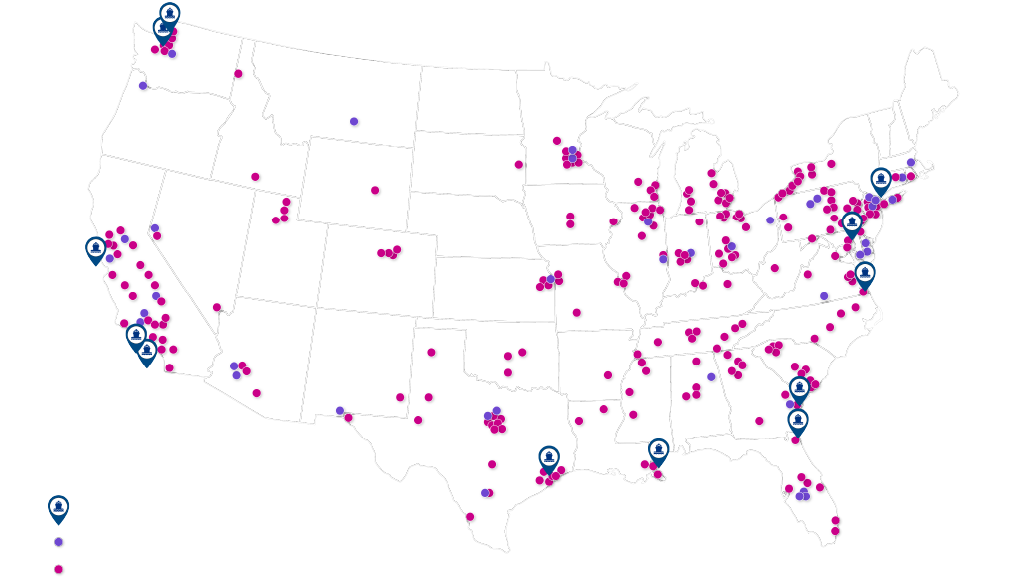
Instead, choosing a 3PL with a nationwide warehousing footprint allows developers to position inventory close to each project site. Storing solar inventory close to work locations means transit times are reduced, freight costs are less affected when rates spike, and deliveries are less likely to be interrupted by weather events or infrastructure failures.
Inventory Deployment Strategy vs. Warehouse Features
Warehouse features, like temperature control and solar handling capabilities, are a vital piece of any solar warehouse selection (we talk more about that here), but a 2026 solar inventory warehousing strategy demands looking beyond the basics.
In addition to considering solar warehouse features, strategic developers are creating intentional inventory deployment strategies. Having a logistics strategy in place from the project’s beginning allows developers to select where and when equipment should be stored throughout the project lifecycle to maximize construction efficiency.
What this may look like in the real world:
- Purchasing equipment early to avoid anticipated price hikes or new tariffs
- Warehousing close to the project site until construction begins
- Leveraging an integrated transportation network to coordinate transport between warehouse sites and job sites so crews don’t face downtime due to delayed or mis-routed deliveries
- Taking advantage of a Warehouse Management System to ensure visibility into equipment location at each step
- Long-term warehousing for O&M spare parts
- Storing individual project equipment close to each site
- Bring additional inventory on site or push delivery dates out as needed with little lead time
- Maintain scheduled work even when weather or other events disrupt transportation or supply chains in nearby regions
Logistics for Utility-Scale Solar and Multi-Site Portfolios
With the right 3PL, developers managing several projects simultaneously can use a national network to allocate solar equipment across markets and sites as needs change.
Distributed storage across multiple regions reduces exposure to port congestion, transportation bottlenecks, and trucking rate spikes. When used as part of an overall procurement and execution strategy, strategic warehousing helps solar developers react to market shifts and keep projects moving even when timelines or equipment plans change.
How Kinect Solar Can Help
With the largest solar-ready warehouse network in the nation, Kinect Solar is uniquely positioned to equip large-scale solar developers with robust logistics strategies. Contact us for a no-obligation quote or to discuss inventory storage strategies for your next solar project.
- Posted in Logistics
- Tagged in Solar developers, solar logistics, Solar projects, solar warehousing